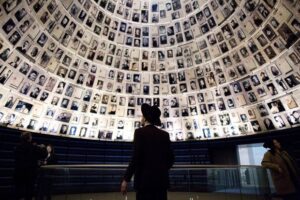
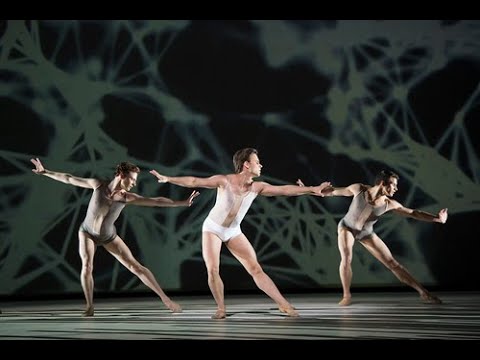
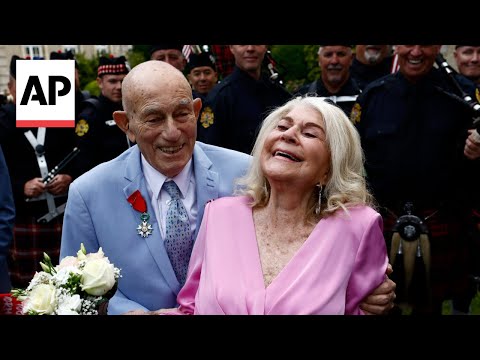
"TAPESTRY: The Faces of AIDS" is an ongoing multimedia project that documents the compelling stories of people who are living and thriving in a new and different era of the ...
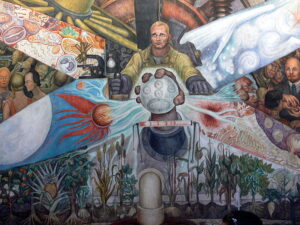
Diego Rivera (December 8, 1886 – November 24, 1957) was born in Guanajuato, Guanajuato, to a well-to-do family. Rivera was descended, on his mother's side, from Jews who converted to ...
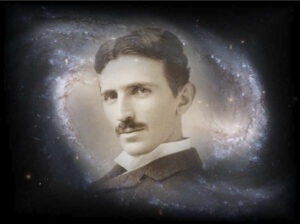
Nikola Tesla (10 July 1856 – 7 January 1943) was a Serbian inventor, mechanical engineer, and electrical engineer. He was an important contributor to the birth of commercial electricity, and ...
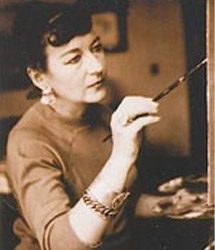
Hedy Lamarr (Nov 9, 1914 - Jan 19, 2000) Hollywood is a place where folks are often recognized more for their looks than their talent - and actress Hedy Lamarr ...
From SIRI to self-driving cars, artificial intelligence (AI) is progressing rapidly. While science fiction often portrays AI as robots with human-like characteristics, AI can encompass anything from Google’s search algorithms ...
The latest global arms race has gone hypersonic. Capable of flying faster than 5000km/h without losing manoeuvrability and lower in the atmosphere than traditional ballistic missiles, hypersonic weapons will offer ...
The world is advancing at unprecedented rates and by 2050, we can expect to see life on earth change drastically. If this is true, then what can we expect from ...
In 1933, the Soviet Union began construction work on what would become some of the world’s most beautiful subway stations. The Moscow Metro opened in 1935. Built mainly by hand, ...
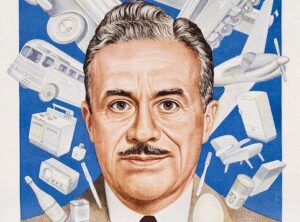
What does it mean to be a celebrated designer? Is it being on the cover of Time Magazine, designing some of America's best-loved exports, or is it something as simple ...
Water is a precious resource and a relatively plentiful lunar presence could prove important to future astronaut and robotic missions seeking to extract and utilize water.The moon lacks the bodies ...
The launch of the first all-civilian mission to orbit scheduled for September 15, 2021, is an ambitious test for a burgeoning space industry's futuristic dream of sending many more ordinary ...
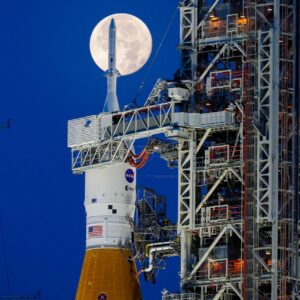
The Space Launch System, with the Orion spacecraft sitting on top, has a central role in the Artemis I mission to orbit the moon. The National Aeronautics and Space Administration’s ...
NASA’s revolutionary, long-delayed $10 billion James Webb Space Telescope has produced its first full-color image, and it’s a doozy: a glimpse deep into space and back in time, capturing the ...
The Seven Wonders of the Natural World may have been named too quickly. Wonders like The Grand Canyon and Victoria Falls are certainly big, and anyone who sees them will ...
When Donald Trump stood before his followers on Jan. 6, 2021 and urged them to march on the United States Capitol, he was doing what he had always done. He ...
Six years ago, three former Mossad agents launched an experimental Israeli Army program to recruit those on the autism spectrum, harnessing their unique aptitudes—their "superpowers," as one soldier puts it. ...
Octopuses have three hearts, parrot-like beaks, venomous bites, and eight semi-autonomous arms that can taste the world. They squirt ink, contort through the tiniest of spaces, and melt into the ...
There are several characteristics of the changing climate that are helping to increase the risks of damage from Hurricanes, even though global warming is not directly causing such a storm ...
American swimmer Michael Phelps swam his final Olympic race on Saturday August 4, 2012, winning his 18th gold and 22nd overall medal with his United States teammates in the the ...
Please light a candle in memory of anyone you know who has been struck down by Cancer or is still living with it. A candle loses nothing by lighting another ...
Writing over at Bloomberg Businesweek, Apple CEO Tim Cook is speaking out publicly for the first time about his sexual orientation."While I have never denied my sexuality, I haven't publicly ...
Michaela Mabinty DePrince is a Sierra Leonean-American ballet dancer. With her adoptive mother, Elaine DePrince, Michaela authored the book Taking Flight: From War Orphan to Star Ballerina. She rose to ...
This issue is both public and personal for the six openly gay Olympians who will be competing at Sochi. They'll join 6,000 athletes from 85 countries. Gay rights have taken ...
At least 35 publicly out gay, lesbian, bisexual, transgender, queer, pansexual and non-binary athletes will be in Beijing for the 2022 Winter Olympic Games, double the amount who competed in ...
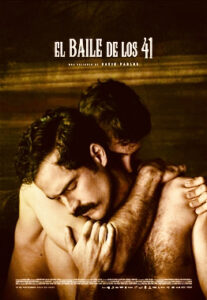
The 'Dance of the 41' changed the way that Mexico interpreted gender and sexuality forever. The number 13 is commonly considered unlucky, but in Mexico, the number 41 has been ...
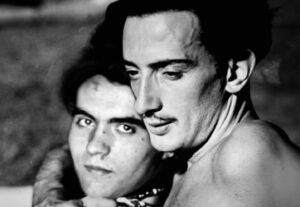
Salvador Dali and Federico Garcia Lorca met in Madrid, in 1923. Along with Luis Buñuel and Pepín Bello, they formed a strong friendship during their student years, living at the ...
The human body is an amazing thing. It is capable of creating life, surviving horrible diseases and accidents, and tasting all kinds of good (and equally bad) food). But human ...
While Mexico holds conservative views when it comes to gender roles, flexibility in this area was common in the country prior to being introduced to Catholicism. And even now, attitudes ...
One way of shielding children from gender stereotypes: Keep their biological sex secret. Three-year-old twins Zyler and Kadyn Sharpe scurried around the boys and girls clothing racks of a narrow ...
Shot by iconic photographer Bruce Weber in New York City, seventeen extraordinary men and women, transgender individuals with diverse experiences and unique personal stories, are the faces of Barneys New ...
Peche Di, a Thai beauty queen who studied at New York University, spent five years booking occasional modeling gigs and looking for an agency to represent her. "They didn't understand ...
Cary Grant's 'friendship' with the devastatingly handsome Randolph Scott was remarkably open and fairly candid in the dangerously oppressed 1930s.There were several photo shoots for the fan magazines of the ...
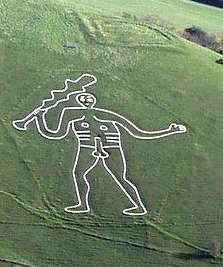
The Cerne Giant is an ancient naked figure sculpted into the chalk hillside above Cerne Abbas in Dorset. Standing at 180ft tall the Cerne Giant is Britain’s largest chalk hill ...
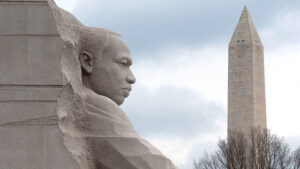
Dr. Martin Luther King Jr (January 15, 1929 – April 4, 1968) was an American clergyman, activist, and prominent leader in the African-American Civil Rights Movement. He is best known ...
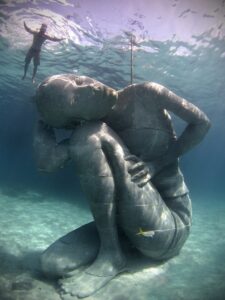
Life-size sculptures submerged underwater—accessible primarily to divers and snorkelers—are part tourist attraction, part ecological experiment in Jason deCaires Taylor's innovative art installations. "Instead of seeing the world as a hidden, ...
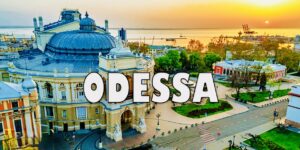
The Odessa Fine Arts Museum, a colonnaded early-19th-century palace, stands almost empty. Early in Russia’s war on Ukraine, its staff removed more than 12,000 works for safe keeping. One large ...
Death can be a morbid and solemn subject in many cultures, but in Mexico, it's a cause for celebration -- at least for two nights a year. From November 1-2, ...
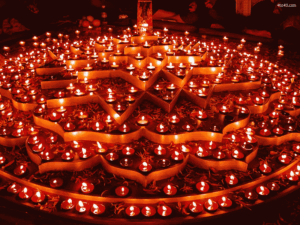
People across the world are gathering together today to light lamps, feast on sweets and set off fireworks. It’s to mark the most important day of Diwali, the five-day festival ...
Fairy tales convey life’s magic, reflecting the deep psychological themes that govern the outcomes of our lives. Written in simple language, these stories take us along soul’s path once more, ...
Quinta da Regaleira is an exquisite estate located in the charming town of Sintra, Portugal. Designed by Italian architect Luigi Manini, the estate features a palace, chapel, and extensive gardens, ...
Lights have been a very important element of many festivals. Even before the discovery of electricity, rather more so because of the lack of it, lighting lamps or lanterns was ...
Jack the Ripper, the infamous serial killer who terrorized the streets of London greater than a century in the past, might have lastly been recognized by forensic scientists in Nice, ...
"Oppenheimer" won big at the 2024 Oscars, coming in with 13 nominations and earning awards in major categories such as best director, best actor and best picture. "Barbie," the other ...
Valerie Plame is an American spy whose identity was revealed by a Washington Post reporter in 2005. President George W. Bush and members of his administration were suspected of orchestrating ...
Josephine Baker is best-known for her celebrated song and dance career that spanned five decades. But she is also famous for being a spy for the French resistance during World ...
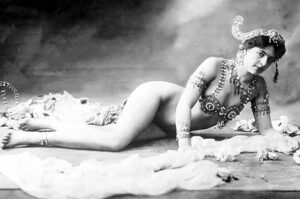
Margareth Geertruida Zelle ( August 7, 1876- October 15, 1917) is the most famous and controversial spy of World War One. She was also known as Mata Hari, a Dutch ...
The Eurovision Song Contest is organized by the European Broadcasting Union, the world's foremost alliance of public service media, representing 116 member organizations in 56 countries and an additional 34 ...
The 1969 Woodstock Music and Arts Fair in Bethel, New York has been considered as the greates Rock Concert of all. The promotional message included a white dove sits on ...
Prisoners in Nazi concentration camps made music; now it's being discovered and performed. More than 6 million people, most of them Jews, died in the Holocaust. The music they wrote ...
Switzerland Wins Eurovision 2024, as protests give way to spectacle. The nonbinary singer Nemo won the high-camp contest, during a night that included pro-Palestinian demonstrations outside the arena and fireworks ...
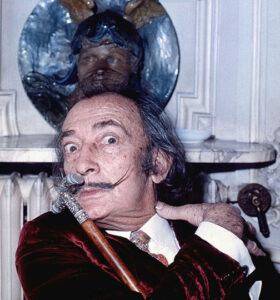
Salvador Dali (1904-1989), born in Figueres, Spain, is best known for his highly imaginative, surrealistic work. In 1968, Dali created 25 colored lithographs taken from his mixed-media paintings to commemorate ...
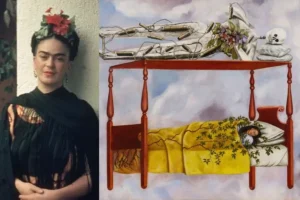
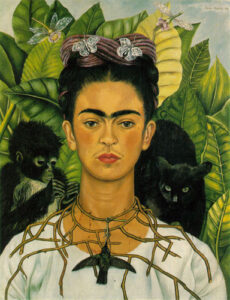
Frida Kahlo's work has been celebrated in Mexico and around the world as emblematic of national and indigenous tradition, and by feminists for its uncompromising depiction of the femele experience ...
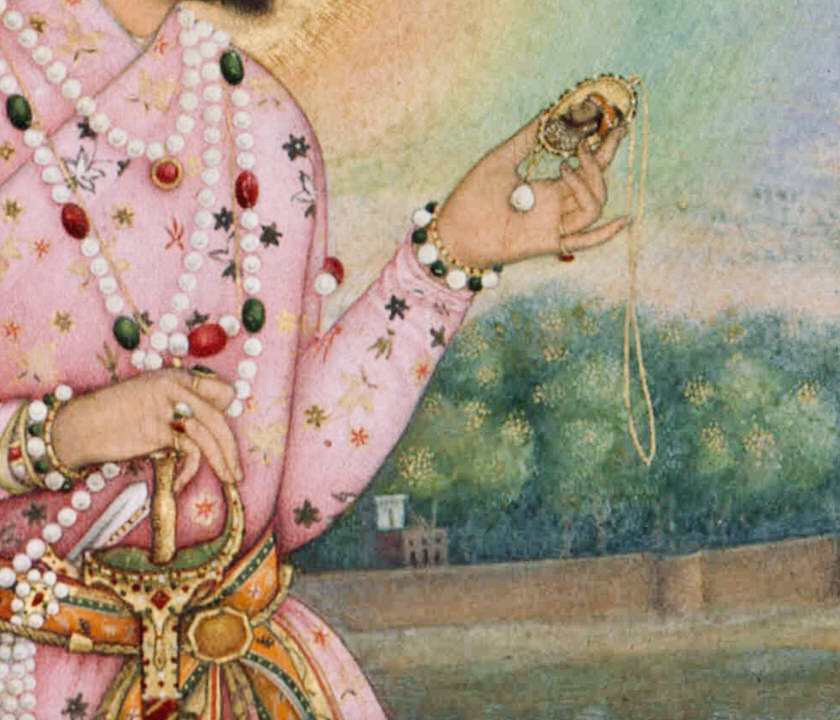
Shahab-ud-din Muhammad Khurram (January 5, 1592 - July 31, 1658) was born in Lahore, in modern-day Pakistan, and was the third son of Prince Salim (later known as 'Jahangir'). His mother was a Rajput princess from Marwar called Princess Jagat Gosaini. The name "Khurram" (joyous) was chosen for the young prince by his grandfather, Emperor Akbar, with whom the young prince shared a close relationship Evidence from the reign of Shah Jahan states that in 1648 the army consisted of 911,400 infantry, musketeers, and artillery men, and 185,000 Sowars commanded by princes and nobles. His cultural and political initial steps have been described as a type of the Timurid Renaissance, in which he built historical and political bonds with his Timurid heritage mainly via his numerous unsuccessful military campaigns on his ancestral region of Balkh. In various forms, Shah Jahan appropriated his Timurid background and grafted it onto his imperial legacy.
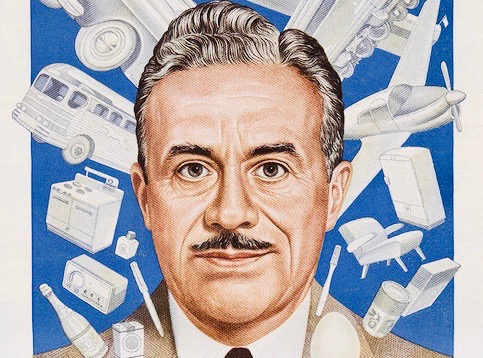
What does it mean to be a celebrated designer? Is it being on the cover of Time Magazine, designing some of America's best-loved exports, or is it something as simple as being recognized with a Google Doodle? Raymond Loewy, one of the 20th century's most prolific and influential designers has now achieved all three, thanks to Google celebration of his 120th birthday a few years ago.. In the same spirit, we've compiled a few of Loewy's most memorable designs:from Air Force One, Lucky Strikes and Coca-Cola — French American Raymond Loewy basically created Americana.
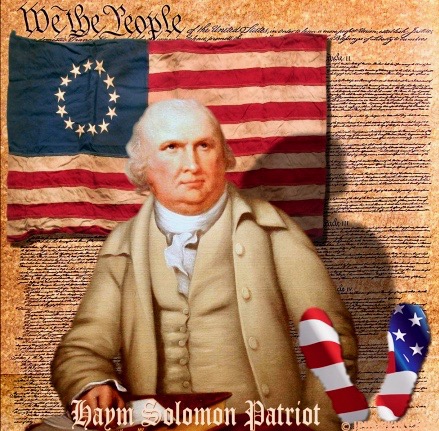
Haym Salomon (April 7, 1740 – Jan. 6, 1785) was a Polish-born American Jewish businessman and political financial broker who immigrated to New York City from Poland during the period of the American Revolution. He helped convert the French loans into ready cash by selling bills of exchange for Robert Morris, the Superintendent of Finance. In this way he aided the Continental Army and was possibly, along with Morris, the prime financier of the American side during the American Revolutionary War against Great Britain.
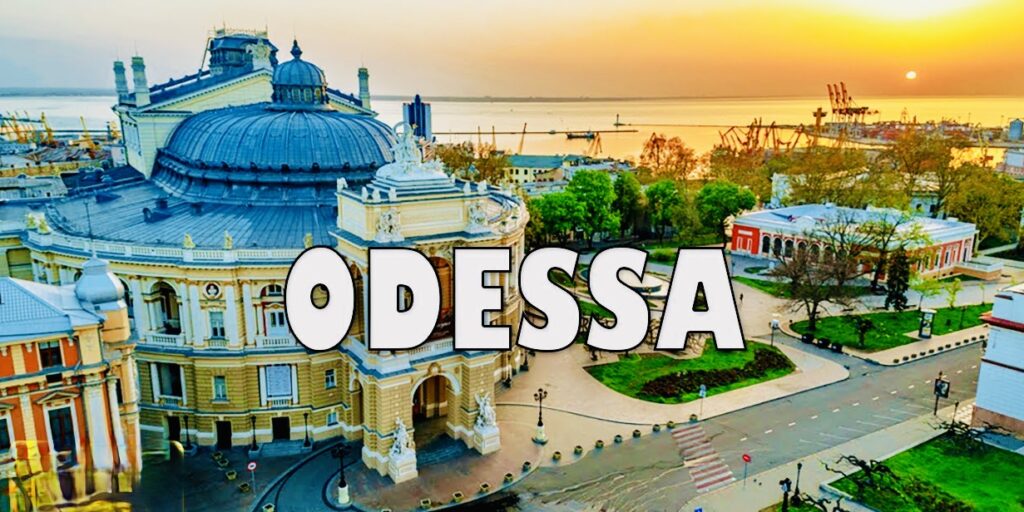
The Odessa Fine Arts Museum, a colonnaded early-19th-century palace, stands almost empty. Early in Russia’s war on Ukraine, its staff removed more than 12,000 works for safe keeping. One large portrait remained, depicting Catherine the Great, the Russian empress and founder of Odessa, as a just and victorious goddess. President Vladimir V. Putin knows that Ukraine’s fate, its access to the sea and its grain exports hinge on Odesa. Without it, the country shrivels to a landlocked rump state.Seen from below in Dmitry Levitzky’s painting, the empress is a towering figure in a pale gown with a golden train. The ships behind her symbolize Russia’s victory over the Ottoman Turks in 1792. “She’s textbook Russian imperial propaganda,” said Gera Grudev, a curator. “The painting’s too large to move, and besides, ...